irrigation system

Understanding Different Types of Irrigation

Irrigation is a critical component in agriculture, landscape maintenance, and horticulture. It helps in the distribution of water to soil, promoting the growth of crops and vegetation even in dry regions. There are primarily four types of irrigation systems widely used around the world: Exploring Different Types of Irrigation System, Exploring Different Types of Irrigation Systems for Agriculture, Exploring Different Irrigation Methods, and Exploring the 3 Types of Irrigation Systems.
Surface Irrigation

Surface irrigation is one of the oldest forms of irrigation and it involves distributing water over the surface of the soil. The water is allowed to flow over the field by gravity, covering as much area as possible.

  • Advantages: Ease of use and low initial cost.
  • Disadvantages: Inefficiency in water usage and labor-intensive.

Sprinkler Irrigation

This system requires pressure to distribute water evenly across crops.

  • Advantages: Provides uniform application for all types of soils.
  • Disadvantages: High installation costs and potential for water loss due to evaporation or wind.

Subsurface Irrigation

It’s often used in areas where water resources are minimal or for crops that require a lot of moisture.

  • Advantages: Reduced evaporation losses and optimal use of limited water resources.
  • Disadvantages: High installation costs and complex management requirements.

Drip Irrigation

This method aims to place water directly into each plant’s root zone and minimize evaporation.

  • Advantages: High efficiency, reduced water usage, and suitability for all types of crops.
  • Disadvantages: High initial cost and requires regular maintenance to prevent clogging.

When deciding on an irrigation system, it is crucial to consider the specific needs of your crop, soil type, local climate, and water availability. The correct system would not only ensure the viability of the crops but also contribute towards more sustainable and efficient water use in agriculture.

Exploring the 3 Types of Irrigation: What are They?

Irrigation and rainfall are both vital to the growth of crops, but they offer distinct advantages and restrictions. Understanding the differences between these two water sources can help farmers determine the best watering strategy for their agricultural needs.

Efficiency of Agricultural Irrigation Systems

  • Rainfall: Rainfall is a natural process and distributes water evenly across a field. It is incapable of discriminating between land areas that need more or less water. The distribution of rainfall depends on weather patterns, which can be unpredictable.
  • Irrigation: Irrigation systems can provide a controlled amount of water to specific sections of a field. This allows farmers to concentrate resources where they are most needed, which can significantly enhance crop yields.

Understanding the Type of Irrigation for Reliability and Consistency

  • Rainfall: As an unpredictable natural process, rainfall may not always coincide with the growing seasons of various crops. Extended periods without rain (droughts) can severely hinder crop growth and result in poor harvests.
  • Irrigation: An irrigation system provides dependable delivery of water regardless of seasonal changes or weather patterns. It guarantees that crops receive an adequate amount of water for growth at all times.

Understanding Different Types of Irrigation Systems
  • Rainfall: There’s no way to control when it rains or how much rain falls at any given time. It’s impossible for farmers to manage rainfall or alter it based on their needs.
  • Irrigation: With irrigation, farmers have complete control over how much water their crops receive and when they get it.

Costs

  • Rainfall: Rainwater is free and does not require any financial investment from farmers.
  • Irrigation: Irrigation systems require initial setup costs as well as ongoing maintenance expenses. However, the increased crop yields and consistent harvests often offset these costs.

Environmental Impact

  • Rainfall: Rainwater has a minimal environmental impact as it is a natural part of the water cycle.
  • Irrigation: Depending on the type of irrigation system used, there could be negative environmental impacts. For instance, surface irrigation can lead to waterlogging and salinization of soils, while pressurized systems can contribute to energy consumption if not managed effectively.

The comparison reveals that both rainfall and irrigation have their roles in agriculture. Rainfall is an ideal source of water due to its natural occurrence and low cost, but its unpredictability makes it unreliable for consistent crop production. On the other hand, irrigation offers reliability, control over water use, and improved crop yields but at an environmental and financial cost. Therefore, a balanced approach that combines both methods would be an effective strategy for most agricultural settings.

Understanding Surface Irrigation and Its Usage in Agriculture

Learn about different types of irrigation systems on Tumblr and from Fruit Growers here:
https://fruitgrowers.com/the-3-main-types-of-irrigation-systems-for-agriculture/

Surface irrigation, as the name implies, is an irrigation method that depends on the earth’s surface’s topography to distribute water to crops. It is one of the oldest forms of irrigation and continues to be widely used in agriculture due to its simplicity, cost-effectiveness, and suitability for various types of soils.

The Basics of Surface Irrigation

Surface irrigation involves directing water flow across the field surface, allowing it to soak into the soil and reach plant roots.

  1. Basin Irrigation: The field is divided into small basins each holding a certain amount of water. This type is ideal for orchards or leveled fields.
  2. Furrow Irrigation: The water is directed into small channels or furrows between rows of crops. This method minimizes water contact with leaves reducing disease risk.
  3. Border Irrigation: The field is divided into long strips or borders that are leveled flat. Water flows down each strip evenly.
  4. Wild Flooding: An uncontrolled method where water is spread over a field without any structured layout.

How Surface Irrigation Works

In surface irrigation systems, water application begins at one end of the field, and due to gravity, it gradually runs over the field’s slope covering all areas till it reaches other end. It requires relatively less equipment compared to other modern methods such as drip or sprinkler systems.

  • Soil Type: Some soils absorb water quicker than others.
  • Field Slope: Steeper slopes can cause faster runoff and uneven distribution.
  • Water Flow Rate: Higher flow rates can cause erosion or flooding.

Advantages of Surface Irrigation

  • Lower cost compared to more technologically advanced systems like drip or sprinkler irrigation.
  • Lower energy requirements since it often uses gravity for water movement.
  • Flexibility in design that allows adaptation to different crop types and soil conditions.

Despite these advantages, surface irrigation does require careful management to ensure even distribution and avoid wastage or run-off. Effective management techniques include precise land leveling and using furrows or basins on appropriate slopes.

Surface Irrigation in Modern Agriculture

Even though there are newer methods available with higher efficiency ratings like drip or subsurface drip irrigation systems, surface irrigation still holds its place in modern agriculture – especially in developing countries where resources are limited. For instance, rice cultivation predominantly relies on this system due its requirement for constant standing water supply.

In summary, understanding how surface irrigation works helps us appreciate its role in agricultural practices worldwide. Despite being an ancient technique, it continues to serve as a significant player in feeding populations by supporting various crop types under different environmental conditions efficiently without demanding high-level infrastructure or technology.

Sprinkler Irrigation: Methodology and Benefits

Sprinkler irrigation represents an artificial method of applying water to crops, simulating rainfall conditions. This type of irrigation system is particularly popular in areas with low natural precipitation and is typically used for growing crops such as wheat, barley, and other field crops. It’s an effective way to irrigate uneven terrains and allows farmers to provide a uniform amount of water to their fields.

Methodology

  1. Water Source: The process begins with water being pumped from a source such as a river, pond or bore well.
  2. Pumping System: The water is then moved through pipes by a pumping system.
  3. Pressurization: The pressurized water is transported through the mainline to the sprinklers.
  4. Distribution: Finally, the sprinklers distribute the water over the crop field in the form of small droplets, mimicking natural rainfall.

Types of Sprinkler Systems

  • Fixed System: These are permanently installed in one location. They consist of pipes mounted above ground level with sprinklers spaced at intervals.
  • Rotating System: As the name suggests, these systems rotate while spreading out water over the fields. They’re useful for large fields that require uniform distribution of water.
  • Portable System: This system can be moved around according to irrigation needs making it handy for farmers who cultivate different crops over time.

Benefits

  • Efficient Water Usage: Sprinkler systems use significantly less water compared to traditional flood methods because they distribute only required amounts minimizing waste due to runoff or evaporation.
  • Uniform Distribution: These systems provide better coverage ensuring uniform distribution across entire fields regardless of size or shape.
  • Versatility: Sprinkler irrigation can water all types of soil and it’s suitable for both residential and commercial landscapes.
  • Prevents Soil Erosion: Since water is delivered directly to the roots, there’s less chance of runoff thus reducing soil erosion.
  • Saves Time and Labor: Sprinkler systems automate the irrigation process, reducing the manpower required and giving farmers time to focus on other tasks.

Therefore, understanding your specific needs is crucial to make an informed decision about which type of irrigation system is best for you.

A Comprehensive Guide to Different Types of Irrigation Systems

This system offers several advantages over traditional irrigation methods and can be highly efficient if properly designed and managed.

What is Subsurface Irrigation?

In subsurface irrigation, water is delivered directly to the root zone of a plant. This method uses a network of pipes, tubes, or tape placed at varying depths below the soil surface, allowing water to be distributed evenly throughout the growing area. The main advantage of this system is that it reduces evaporation and runoff significantly compared to surface irrigation methods.

  • Subsurface Drip Irrigation (SDI): This uses flexible polyethylene tubes with embedded emitters that release water at slow and steady rates. SDI works well in various landscape settings including lawns, gardens, and even agricultural fields.
  • Subsurface Textile (SST) Irrigation: SST systems deliver water below the surface using specially designed textiles that distribute water evenly across their width. SSTs can be used in larger-scale landscapes like golf courses or parks.

Advantages of Subsurface Irrigation

  1. Increased Water Efficiency: Due to direct application to plant roots and minimal evaporation loss, subsurface irrigation conserves more water than other methods.
  2. Reduced Weed Growth: By providing moisture only to plant roots and not on surface soil where weed seeds germinate, this method can help reduce weed growth.
  3. Less Disease and Pest Problems: Surface watering often promotes fungal growth and pest problems – issues largely eliminated by subsurface watering.
  4. Suitability for Various Soil Types: From sandy soils to heavy clays, subsurface irrigation caters to a wide range of soil types.
  5. Less Maintenance: With no surface components, subsurface systems are less prone to damage from landscaping activities, animals or weather.

Implementing Subsurface Irrigation

The implementation of a subsurface irrigation system requires careful planning and consideration.

  1. Site Evaluation: Understanding soil type, water availability, plant species, and climate is vital when choosing an appropriate system.
  2. System Design: This involves positioning of pipes or tapes at proper depths and intervals according to root zone requirements.
  3. Installation: This should be carried out by experienced professionals to ensure correct setup and avoid any potential damage.
  4. Maintenance & Management: Regular system checks for leaks, clogging or damage are important to ensure optimal functioning over time.

The benefits of subsurface irrigation make it an attractive option for many agricultural and landscaping situations. However, its success is largely dependent upon proper design, installation, management and maintenance of the system – factors that should be carefully considered before making a decision.


irrigation system

Understanding Agricultural Irrigation Systems Different Types of Irrigation and Their Importance

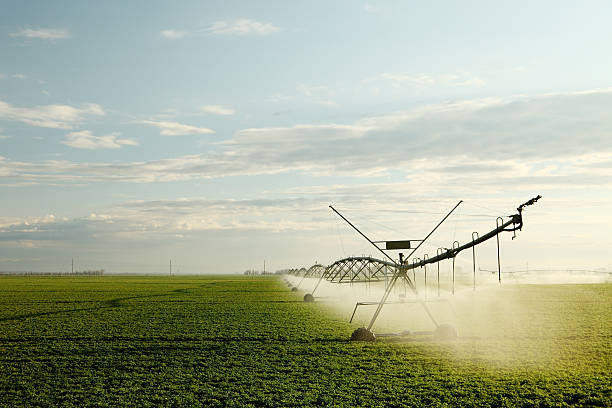
Alfalfa field irrigation An early morning view of an alfalfa field irrigated with a center pivot sprinkler system. irrigation system stock pictures, royalty-free photos & images

Irrigation systems play a vital role in agriculture. They allow for the successful growth of crops in areas where rainfall is insufficient or unpredictable. Different types of irrigation systems cater to varied farming needs, environmental conditions, and crop types. Let’s delve into the different kinds of irrigation methods and their significance.

Exploring Different Types of Irrigation Systems

  • Exploring Different Types of Irrigation Systems: This is the oldest and most common form of irrigation where water flows over the soil surface to wet it and infiltrate the root zone. It’s often used in flat-lying areas.
  • Drip Irrigation: In this system, water is directly delivered to the root zone of plants using emitters or drippers placed on or below the soil surface.
  • Sprinkler Irrigation: This method mimics natural rainfall by distributing water through pipes and pumping it out through sprinklers.
  • Subsurface Irrigation: Here, water is applied below the soil surface by maintaining an artificial water table within or below the root zone.
  • Center Pivot Irrigation: Best suited for large fields, this system enables watering in circles via rotating sprinkler pipes supported by wheeled towers.

Understanding Different Types of Irrigation Systems

  1. Steady Supply: They provide a consistent supply of water, which is crucial for crop growth.
  2. Yield: They increase agricultural yield by ensuring that crops receive enough moisture at all times.
  3. Soil Erosion: By controlling the amount and flow rate of water, they help reduce water runoff and soil erosion.
  4. Drought Resistance: They significantly aid in protecting crops from drought conditions.

By understanding each type’s unique characteristics and requirements, farmers can select an appropriate irrigation system that maximizes their crop yield while conserving valuable resources like water.

Understanding What are the 3 Types of Irrigation: A Comprehensive Guide

Irrigation is a crucial agricultural practice that ensures the steady supply of water necessary for the growth of crops. As we move forward, we’ll explore different types of irrigation and highlight their advantages.

Exploring Different Types of Irrigation Systems for Agriculture

  • Surface Irrigation: It’s cost-effective, ideal for certain types of soil like loamy or clay soils, and doesn’t require sophisticated equipment or technology.
  • Drip Irrigation: This system ensures water efficiency as it delivers water directly to plant roots, reducing evaporation and runoff. It also allows fertilizers to be efficiently mixed in.
  • Sprinkler Irrigation: This method allows even distribution of water. It can also be used for frost protection and crop cooling.
  • Subsurface Irrigation: By providing water directly to root zones, this method reduces evaporation losses. It also does not interfere with the use of the surface above for other purposes such as recreation.
  • Center Pivot Irrigation: This system can cover large areas and can be automated for better time management.

While each system has its unique advantages, it’s essential to consider factors like crop type, soil condition, available resources, local regulations, environmental impact before implementing an irrigation system. Its proper choice and implementation lead to increased productivity and sustainability in agriculture.

Understanding Different Irrigation Methods and Their Numerous Advantages

Irrigation is a quintessential part of modern agriculture. It has evolved from simple, manual watering methods to complex systems engineered for precise application. This guide will expose you to the diverse types of irrigation systems and their undeniable benefits.

Surface Irrigation

This is the most common type and can be seen in various forms such as furrow, basin, border and wild flooding. Water is applied directly to the soil surface from a channel located at the upper reach of the field.

Benefits: – It’s cost-effective since it requires minimal equipment. – It’s suitable for various soil types. – Water distribution is uniform, promoting optimal crop growth.

Drip Irrigation

In this method, water drips slowly to the roots of plants either onto the soil surface or directly into the root zone through a network of tubes, pipes, valves and emitters.

Benefits: – Highly efficient water use. – Precise application leads to better crop yield. – Minimises water wastage and reduces evaporation.

Center Pivot Irrigation

Center pivot irrigation involves equipment rotating around a pivot leading to a circular pattern in crops when viewed from above. The sprinkler system attached distributes water over crops with uniformity.

Benefits: – Efficient water use. – Flexibility in operation; can be used for all types of soils and landscapes. – Automated movement ensures less labor requirement.

Subsurface Irrigation

This method involves delivering water below the ground directly to the root zone. It is achieved by installing a network of pipes at varying depths depending on crop type and soil characteristics.

Benefits: – Great for areas with water scarcity. – Ensures minimal evaporation loss. – Promotes higher crop yield as nutrients are better preserved in soil moisture.

These diverse irrigation systems offer varying benefits depending on your needs like geographical location, type of crop, availability of water, and budget. Understanding these types and their benefits can help make a much more informed decision when it comes to choosing the right irrigation system.

With the continuing advancements in smart irrigation technologies, there are even more possibilities for improving water efficiency and crop yield. These include systems that adapt based on weather data, soil conditions, evaporation and plant water use. The world of modern irrigation holds countless opportunities for growth, sustainability and efficiency.

Exploring the 3 Types of Irrigation in Modern Agriculture

Surface irrigation is a widely used method in modern agriculture. By definition, surface irrigation refers to a class of irrigation where water is applied and distributed over the soil surface by gravity. It’s among the oldest forms of irrigation and continues to be the most popular method globally due to its many advantages.

High Adaptation Capabilities

One significant advantage of surface irrigation is its successful implementation on various land topographies. Whether the terrain is flat, sloping, or undulating, this method can be effectively adapted. This adaptability attribute makes it an ideal choice for farmers worldwide.

Economical

Surface irrigation systems require less investment compared to other advanced irrigation methods such as drip or sprinkler systems. The cost involved in purchasing and installing pipes, pumps, and other equipment is significantly less. Additionally, it requires relatively low operation and maintenance costs.

Sustainability

Surface irrigation taps into natural elements like gravity for water distribution across fields. As such, this method reduces reliance on artificial energy sources making it a more sustainable choice in light of green farming practices.

Versatility

Surface irrigation is suitable for most types of field crops including row crops (like maize), orchards (such as apple or peach trees), or pasture grasses. Therefore farmers aren’t limited by crop selection when using this method.

Easy water management

Farmers can easily manage and control water levels when using surface irrigation systems which helps in minimizing wastage while ensuring optimal crop growth.

Despite these advantages, it’s worth mentioning that successful implementation of surface irrigation heavily relies on careful design, adequate management and maintenance. Some potential disadvantages could arise from poor application such as waterlogging or unequal distribution if poorly managed.

Advantages Disadvantages
High adaptation capabilities Requires careful design
Economical Inadequate management could lead to waterlogging
Sustainability Unequal distribution if poorly managed
Versatility
Easy water management

Understanding the benefits and drawbacks allows farmers to make informed decisions about the best irrigation system for their specific needs, taking into consideration the type of crop, available resources, and geographical location. Surface irrigation remains a popular choice due to its overall benefits and suitability for a wide range of farming conditions.

Exploring Different Types of Irrigation: Benefits and Implementation Strategies

Smart irrigation techniques are not merely a trend in modern agriculture, but rather a necessity in ensuring efficient water usage, sustainability, and optimal crop yields. These sophisticated techniques leverage technology to monitor and manage watering schedules, optimizing water use and improving plant health. Below are some of the key benefits of smart irrigation and how these techniques can be implemented for maximum advantage.

Key Benefits of Smart Irrigation Techniques

  • Water Conservation: One of the most significant benefits of smart irrigation is the reduction in water wastage. Unlike traditional watering methods, smart irrigation systems use sensors to determine the exact amount of water needed by the crops, thereby eliminating excess use.
  • Improved Plant Health: Overwatering can lead to various plant diseases and growth problems. On the other hand, smart irrigation provides precise watering which promotes healthier growth and higher yields.
  • Cost-Efficiency: While investing in a smart irrigation system might seem costly initially, it results in long-term savings. By reducing water usage, farmers can significantly cut down on their utility bills.
  • Time-Saving: Traditional watering methods require manual intervention and monitoring. In contrast, smart irrigation systems automate this process saving valuable time that can be dedicated towards other farming activities.

Implementation of Smart Irrigation Techniques

  1. Evaluation: The first step is evaluating your current irrigation system and identifying areas where improvements can be made.
  2. Choosing Suitable Technology: There are various types of smart irrigation technologies available such as weather-based systems or soil moisture-based systems. Choose a system based on your farm’s specific needs.
  3. Installation: Once you’ve chosen a suitable technology, the next step is installation which should ideally be carried out by professionals to ensure correct setup.
  4. Monitoring & Adjusting: After setting up the system, continuous monitoring and adjustments are necessary to ensure optimal performance. Most smart irrigation systems come with a mobile or desktop application that allows for easy tracking and control.
  5. Maintenance: Regular maintenance of the system is also crucial in ensuring its longevity and performance.

By implementing smart irrigation techniques, farmers can not only conserve water but also increase their crop yield and profitability. This innovative approach represents a significant step towards sustainable agriculture, transforming the way farming is done. These intelligent systems embody the future of irrigation, making it more efficient, sustainable, and productive.


irrigation system

Exploring Different Types of Irrigation: Definitions, Varieties, Significance, and Benefits

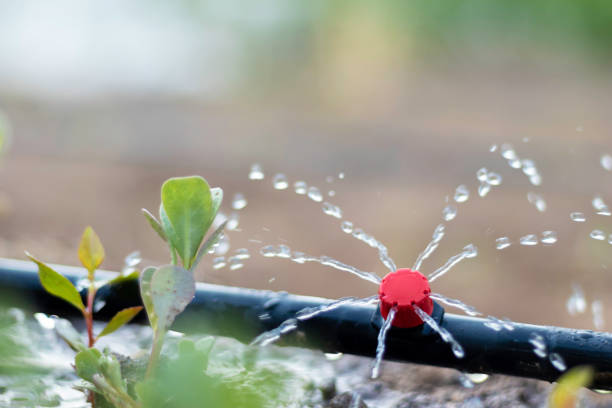
Close up view of drip irrigation pipe puring water into the plantation in the orchard Close up view of drip irrigation pipe puring water into the plantation in the orchard garden irrigation system stock pictures, royalty-free photos & images

Irrigation pertains to the artificial application of water to soil or land to aid in the growth of crops. It is a crucial agricultural practice that enhances food production, ensuring a regular supply of crops regardless of weather conditions. Different types of irrigation systems are utilized worldwide, each with its unique characteristics, benefits, and best use scenarios.

Types of Irrigation Systems

There are primarily four types of irrigation systems: surface irrigation, drip irrigation, sprinkler irrigation, and subsurface irrigation.

  • Surface IrrigationThe water is guided through furrows and ditches. It’s one of the oldest forms practiced worldwide.
  • Sprinkler Irrigationmimics rainfall by distributing water through pipes and pump systems that spray it over crops. It’s typically used for lawns or crops like wheat and barley.

Understanding Different Types of Irrigation System

  • Enhancing crop yield: Adequate water supply ensures healthy crop growth leading to increased output.
  • Conservation of water: Methods like drip irrigation help in reducing wastage making efficient use of available resources.
  • Adapting to topography: Certain methods like sprinkler system can adapt to any land terrain making it suitable for hilly areas.

Exploring Different Types of Irrigation Systems for Agriculture: Benefits and Uses

  • Surface Irrigation: Often the most cost-effective method, it is also easy to implement and maintain.
  • Drip Irrigation: Allows precise water control, minimizes evaporation and reduces weed growth.
  • Sprinkler Irrigation: Efficient in water distribution, can be used on uneven land, reduces soil erosion.
  • Subsurface Irrigation: Provides moisture directly to root zone minimizing evaporation loss, suitable for perennial crops.

Our next articles will delve deeper into the individual irrigation methods, offering more specific insights into each of them. By understanding these methods in depth we can optimize our agricultural practices ensuring sustainable and efficient production.

Exploring Different Irrigation Methods

Irrigation is a critical agricultural practice that involves the systematic application of water to promote plant growth. The right irrigation system can increase crop yields, reduce water wastage, and improve farming efficiency.

Surface Irrigation Method

Surface irrigation is arguably one of the oldest methods of irrigating farmlands. It is an effective method for several crops like rice that require a lot of water. However, it may lead to excessive water usage if not properly managed.

  • Furrow Irrigation: Here, long furrows are constructed between crop rows. Water flows along these furrows covering only a portion of the field.
  • Border Strip Method: In this technique, fields are divided into strips with raised borders where water flows from one end to another.

Drip Irrigation Technique

Drip irrigation is an efficient watering system that delivers water directly to the plant’s root zone. It uses a network of tubes, valves and emitters for precise delivery of nutrients and water to each plant individually.

  • Micro-sprinkler Systems: These small sprinklers provide uniform distribution of water over a defined area.
  • Subsurface Drip Irrigation (SDI): SDI uses permanently or temporarily buried dripperline or drip tape located at or below the plant roots.

Sprinkler Irrigation System

The sprinkler system mimics natural rainfall by distributing water in a controlled manner over farmland from overhead pipes. It is efficient for areas with irregular land surfaces or sandy soil.

  • Center Pivot Irrigation: A rotating sprinkler system irrigates a circular area of a field.
  • Linear Move Irrigation: Linear systems move across fields, sprinkling water as they advance.

Benefits of Different Irrigation Systems

  1. Enhancing plant growth: Regular and appropriate watering promotes healthy plant growth and higher crop yields.
  2. Conserving water: Modern irrigation techniques like drip irrigation reduce water wastage by delivering water directly to the plants’ root zone.
  3. Increasing farming efficiency: Automated irrigation systems save time and labor in watering large agricultural fields.

Understanding the intricacies of various irrigation systems can guide farmers in choosing the most appropriate method for their specific needs and conditions. These systems, when properly used, can substantially improve agricultural productivity while conserving precious water resources.

Understanding What are the 3 Types of Irrigation

Flow irrigation method, also known as surface or gravity-fed irrigation, is a common and traditional form of watering agricultural lands. By controlling the flow of water through a series of furrows or ditches, water gradually seeps into the soil to reach plant roots.

Understanding the 3 Types of Irrigation

The flow irrigation method employs an uncomplicated principle: using gravity to distribute water across the agricultural land. Delivering water at one end of the field allows it to naturally move along the slope, covering more area without any mechanical aid.

However, for this method to function effectively, careful land preparation is necessary.

Different Types of Agricultural Irrigation Systems

  • Furrow IrrigationWater flows down these furrows and infiltrates into root zones.
  • Basin Irrigation: In this method, flat basin-like areas are filled with water allowing it to infiltrate into soil.
  • Border Strip: Water is applied in strips between established borders or levees.
  • Wild Flooding

Understanding the Type of Irrigation: The Significance and Methods

  1. Low Initial Cost: The infrastructure needed for this type requires less investment compared to other forms like drip or sprinkler systems.
  2. No Energy Requirement: It exploits gravity’s natural force without needing extra energy for distribution.
  3. Suitable for Various Soil Types: It can be used in sandy, loamy, or clay soil.
  4. Cultivation of Versatile Crops: It supports a wide range of crops including grains, legumes, fodder and fruit trees.

Exploring Different Types of Irrigation: Advantages and Disadvantages

While the flow irrigation method has numerous benefits, it does have a few drawbacks. One major concern is the potential for water wastage due to uneven distribution. It also may cause waterlogging, leading to salinity problems. However, these issues can be mitigated by proper land preparation and regular maintenance.

Another solution is the integration of modern technology, improving its efficiency and diminishing water consumption. Techniques like laser levelling can enhance field flatness while gated pipes can control water flow more efficiently.

In essence, understanding the concept and functionality of the flow irrigation method helps optimize its use in agriculture. With careful planning and management, this traditional method continues to play a vital role in sustainable farming practices worldwide.

Comprehending Lift Irrigation: An Essential Component of Agricultural Practices

Lift irrigation is a method of irrigation where water is not transported by natural flow but is instead lifted with the help of pumps or other means. It’s an essential technique used in agriculture, especially in regions where the water table is low and needs to be artificially lifted to adequately irrigate fields.

In lift irrigation, water is typically sourced from wells, rivers, or reservoirs. It’s then lifted and distributed to various sections of agricultural fields through canals, pipelines, or sprinkler systems.

The Mechanism Behind Lift Irrigation

The fundamental principle behind lift irrigation involves drawing up water against gravity from its source and then distributing it across agricultural lands for crop cultivation.

  1. Water sourced from wells or rivers is pumped up using power-driven pumps.
  2. Once elevated, this water is directed into mainline pipes.
  3. From these mainlines, the water flows into smaller distribution pipes that span across different sections of the farm.
  4. Finally, through outlets in these distribution pipes, the water reaches the fields.

Varieties of Lift Irrigation Systems

The scale and mechanism utilized for lifting determine the type of lift irrigation system used.

  • Manual Lift System: Herein manual labor serves to elevate and distribute water using hand pumps or buckets.
  • Animal-driven Lift System: Animals such as oxen are engaged for lifting and carrying water from source to fields.

Significance of Lift Irrigation in Agriculture

  • Availability of Water: In areas where the natural flow isn’t sufficient for crop cultivation due to geographical constraints or low rainfall levels, lift irrigation ensures an adequate supply of water.
  • Uniform Distribution: Lift irrigation can distribute water uniformly across the fields, which enhances crop yield and prevents excess water wastage.
  • Adaptable to Terrain: Irrespective of the landscape, lift irrigation systems can be adapted to different terrains.

The Benefits of Lift Irrigation

  • Optimal Water Usage: By enabling uniform water distribution, lift irrigation systems promote efficient use of water resources.
  • Increased Agricultural Productivity: Ensuring proper water supply leads to better crop growth and increased agricultural productivity.
  • Rural Employment Opportunities: The construction and maintenance of lift irrigation systems provide employment opportunities in rural areas.

It’s important to remember that while lift irrigation has numerous advantages, it’s also characterized by high initial costs and energy demands. Therefore, its implementation should be considered after comprehensive planning and cost-benefit analysis.

Delving into Sub-Surface Irrigation: An Efficient Water Management System for Agriculture

Sub-surface irrigation, also known as subsurface drip irrigation (SDI), is an efficient and sustainable method of irrigation.

SDI systems have a variety of benefits that make them a popular option for agricultural practices.

Advantages of Sub-Surface Irrigation

  • Optimal Growth Conditions:By precisely controlling the amount of water delivered to each plant’s roots, SDI ensures optimal growth conditions.
  • Reduced Weed Growth:Since only the area around the plant’s roots is irrigated, weed growth in other areas is minimized.
  • Lower Energy Requirement:SDI systems generally require less pressure than traditional overhead irrigation systems, resulting in lower energy costs.

Implementation and Maintenance of Sub-Surface Irrigation Systems

  • Designing the System:The design should ensure uniform distribution of water across the field. The system must be designed considering soil type, crop type, field slope and shape.
  • Installation Process:Installation process includes trenching or plowing in drip tubing below ground level at a depth appropriate for specific crops.
  • Maintenance Needs:These include regular flushing of lines to prevent clogging from minerals or organic material build up; checking system pressure; monitoring crop health & yield; periodically checking for leaks.

Potential Drawbacks

Despite its many advantages, there are some potential drawbacks to using SDI.

  • Initial Expense:The initial cost for setting up a sub-surface irrigation system can be higher compared to other systems since it requires specialized equipment and materials.

Overall, sub-surface irrigation presents an efficient and sustainable method of irrigating crops, especially in regions with water scarcity. It benefits both the crop’s growth and the environment through its efficient use of water. As such, it is an integral part of modern water management systems in agriculture.